
OpenAI is reportedly developing a powerful new music generator. This tool will significantly advance AI music creation. It aims to rival popular platforms like Suno and Udio. This development marks a thrilling new chapter. AI’s capabilities are expanding into creative audio.
The Entry of OpenAI into AI Music
OpenAI has a history with generative music. Their 2020 model was called Jukebox. A jukebox could create songs with vocals. It generated music in various artist styles. However, Jukebox was computationally intensive. Its output quality was limited. The technology has advanced greatly since then. The new OpenAI music generator promises much more.
The new model is expected to be groundbreaking. It will produce high-fidelity audio. Users will generate music from simple text prompts. Imagine typing “upbeat pop song for a summer drive.” The AI could create a full track. Audio prompts may also be possible. A user could provide a vocal line. The AI would then compose instrumental backing.
Collaboration is key to this project. OpenAI is working with Juilliard students. These students are highly talented musicians. They are helping train the AI model. This input ensures musical sophistication. It helps the AI understand nuance. This partnership aims for truly artistic results. The goal is to create expressive, human-like music.
The Competitive Landscape: Suno and Udio
The AI music landscape is vibrant. Suno and Udio are current leaders. These platforms have amazed users. They create full songs from text prompts. Their output often includes lyrics and vocals. They cover a vast range of genres. Both tools are user-friendly. They make music creation accessible.
Read More : Snapchat’s Imagine Lens: AI Art Generator Now Free for Everyone
Suno gained massive popularity quickly. It produces catchy and polished tracks. Users are creating diverse musical pieces. Udio offers similar impressive capabilities. Its generative powers are also strong. These tools show AI’s creative potential. They set a high bar for new entrants. The new OpenAI music generator will face strong competition.
Google also invests in AI music. Models like MusicLM exist. These can generate music from descriptions. The field is rapidly evolving. Every new tool pushes boundaries. OpenAI seeks to lead this innovation.
Future Effects and Possible Integrations
The new OpenAI music generator has exciting implications. It could integrate with other OpenAI products. Sora is their advanced video generation model. Imagine creating a video with Sora. Then, you could instantly generate a custom soundtrack. This integration would offer seamless content creation. It would empower digital artists.
ChatGPT integration is another possibility. Users could ask ChatGPT for a song. The AI would then compose and play it. This would enhance conversational AI. It makes interactions more dynamic. It could bring creative projects to life.
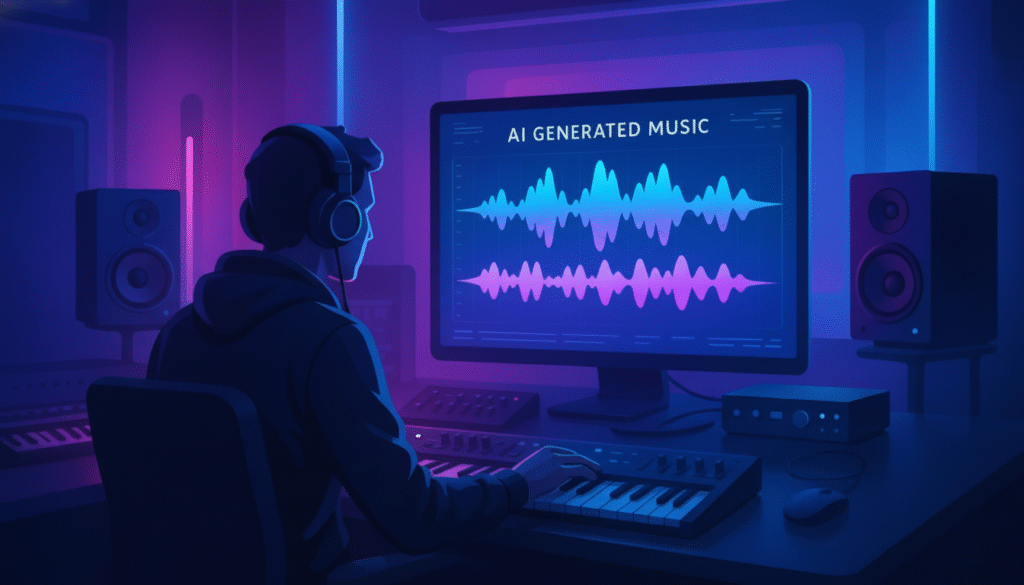
The impact on content creators will be significant. Musicians might use it for inspiration. They could generate backing tracks. Filmmakers could create unique scores. Podcasters could find bespoke intros. Small businesses could produce jingles. This democratization of music creation is powerful. It lowers barriers to entry.
Copyright will remain a major topic. How will generated music be licensed? This is an ongoing industry discussion. Clear guidelines will be necessary. OpenAI will need a thoughtful approach.
Technical Aspects and Challenges
Training an AI music generator is complex. It requires massive datasets. These datasets include countless songs. The AI learns patterns and structures. It understands melody, harmony, and rhythm, while also learning about different instruments and vocal styles.
The model must also understand human language. It connects text prompts to musical elements. This text-to-music translation is difficult. It needs to interpret subjective descriptions. “Joyful” or “melancholic” must translate to sound.
Quality output is another challenge. AI-generated music needs cohesion. It must sound musically intelligent. It should avoid dissonance. The new OpenAI music generator aims for this. It prioritizes musical quality. This makes the Juilliard collaboration crucial. Their expertise refines the AI’s output.
Performance speed is also critical. Users expect quick results. The generator must process prompts efficiently. It needs to create music in minutes. This improves the user experience greatly.
The Future of Creative AI
The arrival of a new OpenAI music generator is exciting. It signals a shift in creative industries. AI is not just automating tasks. It is becoming a creative partner that offers new tools for expression and expands artistic possibilities.
We are entering a new era. Humans and AI will collaborate more. This partnership will foster innovation. It will create entirely new forms of art. The boundaries of creativity are expanding. The new OpenAI music generator is a testament to this.
FAQs
1. What is the OpenAI music generator?
It is a new artificial intelligence tool being developed by OpenAI. It will create high-quality, original music from simple text or audio prompts.
2. Is this OpenAI’s first music model?
No. OpenAI previously released a model named Jukebox in 2020. This new generator is expected to be much more advanced and produce higher-quality results.
3. Who are the main competitors to this new tool?
The main competitors mentioned are other popular AI music platforms, specifically Suno and Udio, which are already known for creating full songs from prompts.
4. How might the OpenAI music generator be used?
It could be integrated with other OpenAI tools. For example, it might create custom soundtracks for videos made with Sora or be used directly within ChatGPT.
5. Why is the Juilliard School mentioned?
OpenAI is reportedly collaborating with students from Juilliard. These musicians are helping to train the AI, aiming to give its music more human-like expression and nuance.
Expect more announcements soon. The official release will be highly anticipated. It will likely bring further advancements, challenge existing notions of music, and redefine how we create sound. The future of music is sounding more AI-powered.
For More Ai & Tech Updates: Visit Here